
Morgan 72-Hour Release Reality
Morgan County does not publish a rolling 72-hour or three-day release list. The official sheriff page has no jail roster, release filter, or archive. That absence follows the local custody structure: the Utah Department of Corrections jail survey reports zero jail beds in Morgan and says local jail sentences go to Weber or Davis County. The receiving institution, not an invented Morgan County jail, holds the custodial transaction when it admits and releases the person.
A three-day release inquiry should therefore begin with Morgan County Sheriff. Ask where the person was taken and which agency completed the release. The answer determines whether the record belongs with Morgan, Weber, Davis, UDC, or another custodian. This step also prevents results from another state’s Morgan County or an unrelated Utah county from being mistaken for the local record.
Morgan may own the arrest, incident, or transport entry even when an outside sheriff owns the later jail record. If release occurred before transport, Morgan may also hold the completed local event. Request the receiving agency name along with the date and time of transfer. That simple routing fact keeps a broad three-day inquiry from being sent to several offices that never held the person.
Request Morgan 72-Hour Releases
The correct substitute for the absent feed is a date-bounded release-log request. State the start timestamp, end timestamp, and local time zone. Ask the custodian to include Morgan as the originating agency or the Morgan case number so its mixed population can be filtered. A request covering Friday evening through Monday evening is clearer than “the weekend,” which may not match the agency’s work or data cycle.
- Ask Morgan Sheriff which jail received the person or group tied to the requested period.
- Give that custodian exact start and end timestamps, plus the Morgan originating agency or case filter.
- Request completed release time, release type, authority, and any public transfer destination.
- Ask for the status-code legend and electronic delivery, with a cost estimate before fees are incurred.
- Compare uncertain entries with court, VINE, or UDC records suited to that form of custody.
Use the Morgan County 24-hour releases route when the question is limited to the current day. The wider request is better when the event may have crossed midnight or occurred during a closure.
Morgan 72-Hour Release Fields
There is no official online Morgan field set to reproduce. A well-scoped response should instead contain the fields needed to prove which booking left custody inside the three-day window. Ask for fields, not a vague “inmate file.” Protected or private material can be redacted while releasable parts are produced.
| Field | Use in the three-day review |
|---|---|
| Full booked name and aliases | Matches the entry despite spelling or name variation. |
| Booking number | Separates one custody episode from an older or later booking. |
| Originating and booking agencies | Shows the link to Morgan and the receiving jail. |
| Admission and release timestamps | Places the completed event within the exact request interval. |
| Release type or authority | Distinguishes bond, time served, court order, parole, or discharge. |
| Hold or transfer disposition | Shows when departure was continued custody rather than community release. |
The strongest match combines the booking number, completed release timestamp, and disposition. If an exported log uses codes, ask for their definitions. Without that key, a transfer code may be wrongly read as release to the community.
Weekend Morgan Release Windows
The three-day interval is useful around weekends and holidays because an event can fall outside a one-day search before a family member or advocate checks. It also allows room to compare a Friday court action with later jail processing. Still, the request is a historical record inquiry, not a real-time notification and not proof that each authorized release occurred at once.
Release paths move at different speeds. Bail processing may start once payment and authority are confirmed. A court order must reach and clear the jail. Time-served processing follows the applicable completion date. Identity checks, property return, other warrants, and holds may affect the exit. If immediate status matters, call the confirmed custodian first and follow the verbal answer with a dated record.
Davis publishes different operational clues for commitment and bail cases but withholds exact release dates and times. Its guidance says commitment release tends to begin on the last day, while bail can be posted at any hour and processing may take time. Those statements do not create a public three-day list. They help frame a call after Davis placement has been confirmed and show why the completed timestamp is still needed.
Note: A three-day span captures more dates, but it does not cure data lag or turn an authorization into a completed release.
Morgan Release Roster Gaps
Morgan publishes no roster because it operates no jail. Weber and Davis publish current-only lists, and neither provides a 72-hour released view. Weber goes further by stating that its webpage is not an official inmate roster. Its list and detail fields help identify someone currently shown, yet they omit release time, release reason, photograph, and released-history filtering.
The Davis inmate-information source says release dates and times are not published for safety. That means a researcher cannot infer a three-day Davis release list from an empty current search. Direct confirmation and a targeted historical request remain necessary.
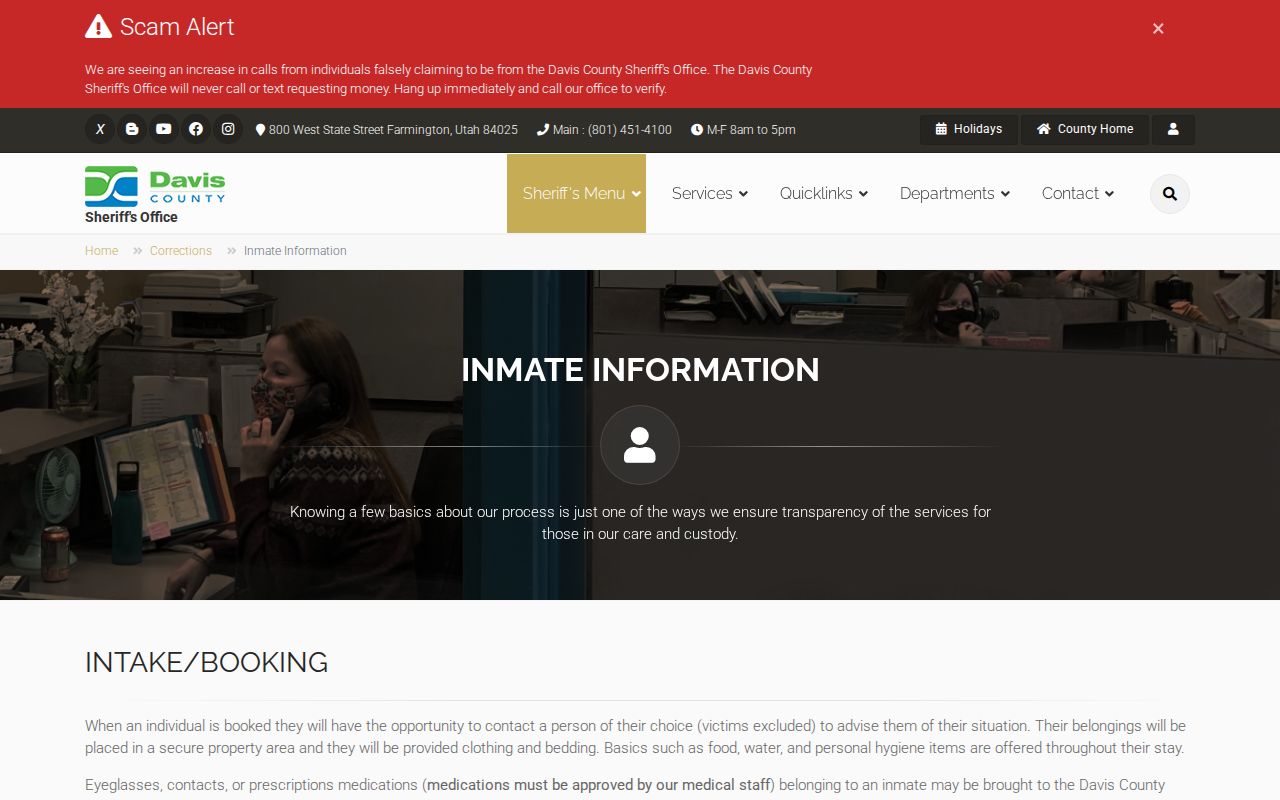
A name may leave a current roster because of release, transfer, a correction, delayed entry, or another status change. Comparing daily snapshots would preserve none of the authority or destination fields needed to tell those events apart. The custodial record controls.
Weber Morgan Release Records
When Weber housed the person, Weber Records is the sound historical channel. The Morgan-Weber agreement gives Weber custodial management over Morgan prisoners it accepts. The Weber Sheriff Records page routes requests to a written process or electronic portal and provides the bureau’s current instructions, office contact, hours, and fee schedule.
The Weber electronic records portal lets a requester submit the precise three-day interval without relying on a live roster. The request should include requester contact information, a narrow record description, and the Morgan link. Weber asks for government photo identification and advises users to allow its stated grace period. Utah law separately governs the formal response and any extension or clarification.
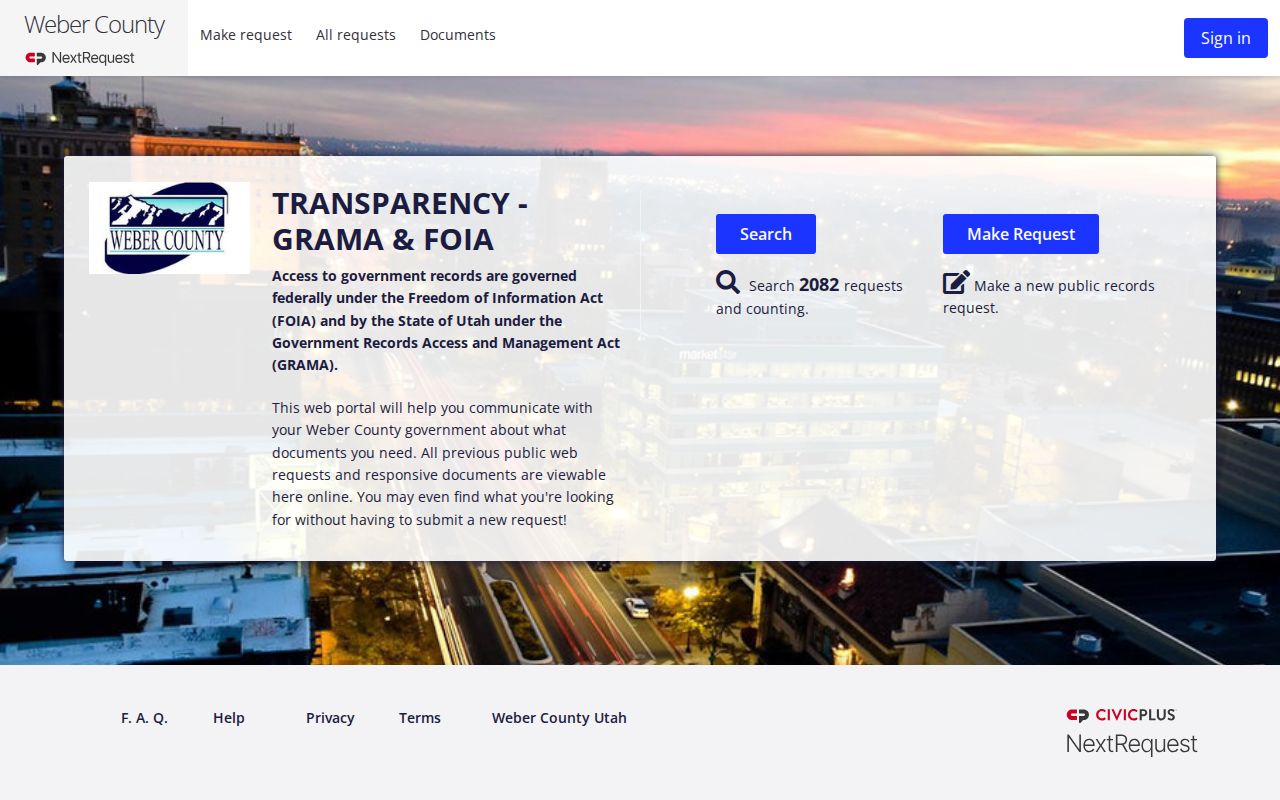
The portal screenshot marks the correct route for a durable Weber booking-and-release result. Request electronic delivery and an estimate before costs exceed the amount you set. A smaller date range and clear field list can reduce needless review.
Morgan Release Custody Types
Not every Morgan County release belongs in a county jail log. A local detainee who never entered UDC may not appear in the state offender search. A state prisoner may be shown as PAROLE, meaning the person left prison but remains under supervision. Full discharge means the sentence or supervisory authority has ended. A federal release belongs in federal sources, while an immigration transfer or detention question belongs with ICE and the sending facility.
- Release
- A completed departure from one custodian under a stated authority or disposition.
- Transfer
- Movement to another facility or agency while custody continues.
- Parole
- Release from prison under Board and field-supervision authority.
- Discharge
- The end of the sentence or supervision authority, not just departure from a building.
The category tells the reader where to verify next. Use the receiving sheriff for a county release, UDC and Board records for state prison or parole, and the relevant federal custodian for federal status. A single current roster cannot cover all of them.
A court docket supplies another layer. It can show the order behind bail, dismissal, sentence completion, or commitment. Yet the court does not run the release desk. Compare its date with the custodial timestamp and any hold field. A later jail time may reflect the work required to execute the order, while a transfer disposition shows that custody continued elsewhere.
Verify Morgan 72-Hour Releases
VINE may show an agency-reported event and can support notification registration when the agency participates. It is useful corroboration, not the legal release record. Utah court records may show bail, dismissal, sentencing, or commitment orders, but an order authorizing release does not prove the jail completed every step. UDC Offender Search applies to people currently under Utah corrections supervision and is not a history of all county releases.
The most reliable chain is simple: identify the custodian, obtain the completed release entry, read its type and time, then compare the source that supplied the authority. If the person has fully discharged and no longer appears in a live state search, Board decisions, court records, or a focused records request may preserve the trail.
For a named-person search across more than three days, use the Morgan County released-inmate lookup. It separates local jail, UDC, court, notification, federal, and immigration paths while keeping a current-custody clue distinct from proof of release.