
Davis Facility Release Outcomes
The Utah Department of Corrections jailbook identifies Davis County, along with Weber County, as a destination for people sentenced to jail from Morgan County. That does not mean each Morgan prisoner goes to Davis. Establish the placement through Morgan's transport or commitment information before relying on Davis records. This step avoids treating a no-match in the wrong county as proof of release.
Once Davis custody is confirmed, the last event may be bail, completion of a commitment, a court-ordered release, or transfer. Community release ends confinement at Davis. Transfer moves the person to another sheriff, UDC, or another lawful custodian. The historical transaction should name the release type or authority and may identify the destination when public. Pair that information with the completed date and time rather than relying on the live roster alone.
Confirm a Davis Facility Release
The Davis current roster lists people presently displayed in custody. Its list provides booking date, name, gender, age, and a details link. It is not a released-person archive and has no released-history filter or photo column. An absent name has little meaning unless a prior record or direct confirmation first placed the person at Davis.
Follow these steps for a Morgan County case:
- Ask the Morgan County Sheriff's Office or court which county received the person.
- If Davis is confirmed, check the roster for current display and verify the booked identity.
- Call Davis Corrections at 801-451-4200 for routing and current-status limits.
- Request the narrow booking-and-release transaction for historical confirmation.
- Compare the authority with the Morgan court record and follow any named transfer destination.
The Morgan County released-inmate lookup explains why a UDC search is not the first route for an ordinary county sentence. A person committed to state prison follows a different statewide record path.
Note: If no prior Davis match exists, return to Morgan for the transport destination instead of inferring that release occurred.
Davis Facility Release Records
Ask for one custody transaction rather than every file about the person. A useful request identifies the full booked name and aliases, date of birth if known, Morgan arrest or commitment range, originating agency, and case number. Request the booking number, admission date and time, public charges and holds, completed release date and time, release type or authority, and public transfer destination. The facility will classify each responsive field under Utah law.
| Source | What it can establish | Main limit |
|---|---|---|
| Davis current roster | A person is presently displayed in Davis custody | No release history |
| Davis Corrections | Placement and request routing | Release times are not publicly provided |
| Davis release record | Completed custody transaction and disposition | Protected fields may be redacted |
| Morgan court docket | Order, sentence, bail, or dismissal authority | Does not prove jail processing finished |
Utah GRAMA recognizes public, private, controlled, and protected records. Security, active investigation, victim, medical, juvenile, sealed, and expunged material may be withheld. The public part of a record can still be produced after protected information is separated. A narrow request for the release transaction is easier to evaluate than a demand for an entire correctional file.
Davis Release Office Contact
Davis Corrections is the direct route after placement is known. Sheriff administration can route a formal records question. The research supplies the correctional facility's address and two published telephone lines, but no public promise of exact release-time disclosure.
Davis County Correctional Facility
800 West State Street
Farmington, UT
Corrections: 801-451-4200
Sheriff administration: 801-451-4100
When the custodian is still uncertain, call the Morgan County Sheriff's Office at 801-829-0590 or dispatch at 801-395-8221. Morgan can supply its arrest and transport information. Davis should be asked for the admission and release record only after its role is established.
Note: The statewide open-records portal can aid routing, but each sheriff classifies and produces the records it created.
Davis Facility Release Timing
The Davis inmate-information page says release dates and times are not provided for safety. It also says a commitment often ends near the hour of the original booking. The Sheriff's FAQ gives another operational statement: commitment releases typically begin around 8 a.m. on the last day. These points should be read together, not forced into a single promise.
The sound conclusion is limited. Exact timing for a named person is not public, and different release categories may follow different workflows. Bail can be posted around the clock, but processing may take hours. Staff may need to verify the order, check other holds, complete paperwork, and return property. A general start time is not a completed release timestamp.
The facility manifest capture uses the official Morgan District Court route that connects a Davis commitment or release with its court disposition.
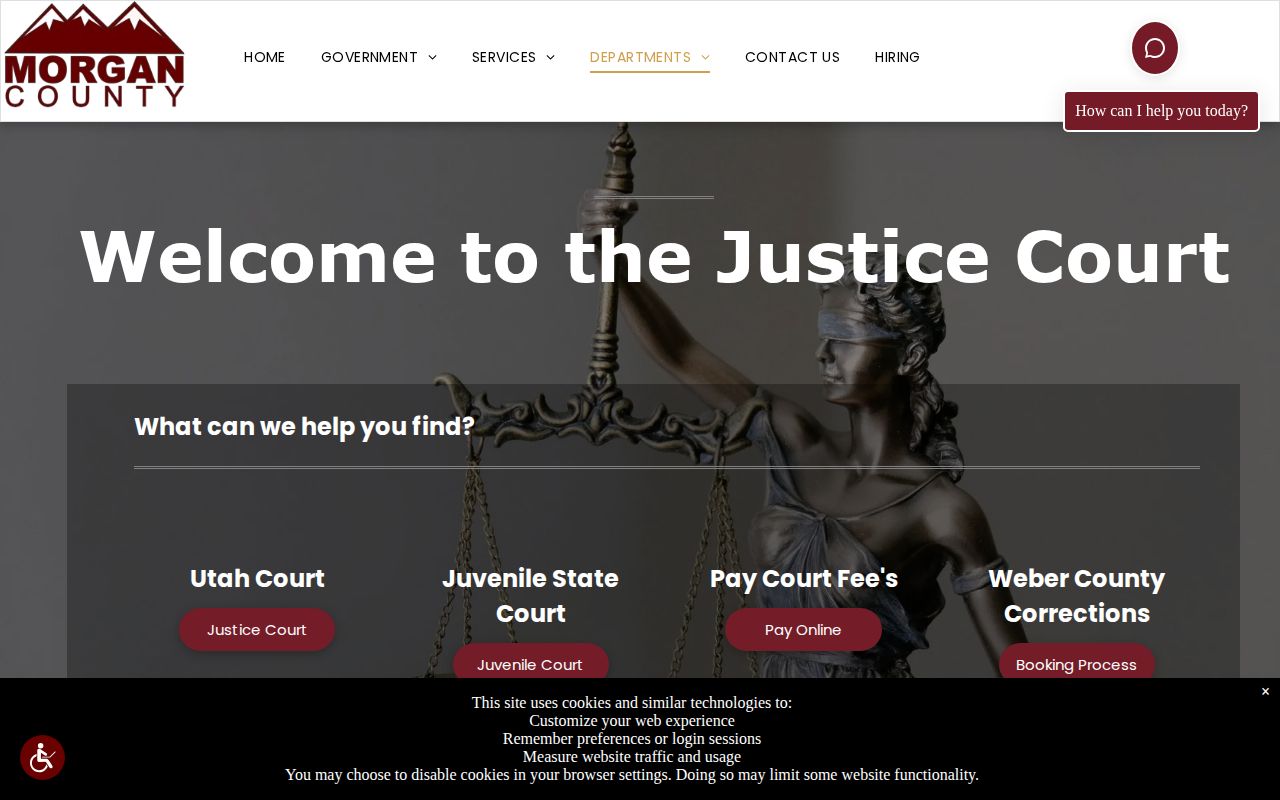
The image reinforces why the Morgan order and Davis custody transaction must be read together after departure.
Davis Release Role for Morgan
Morgan County's zero-bed status is the defining facility fact. UDC's official jail-program survey says Morgan jail sentences are transported to either Weber or Davis. This arrangement explains why Morgan's sheriff page has no local roster or release feed. It also makes the receiving county part of the proof chain.
Davis is an alternate receiving jail, not an automatic destination. A person arrested in Morgan might be released before transport, sent to Weber, committed to Davis, or later transferred elsewhere. The originating record identifies the route. Once Davis appears in that chain, its booking and release fields control the event at this facility.
Does a Morgan sentence mean Davis held the person? No. The state source names both Davis and Weber. Confirm the actual transport and booking.
Because the facilities serve different systems, a Davis release should not be searched as a state-prison discharge unless the record says UDC took custody. UDC Offender Search covers people under UDC supervision, not every county detainee.
Split Davis-Morgan Release Records
Record ownership follows the act each agency performed. Morgan may hold the arrest report, incident number, temporary local entry, transport record, and court routing. Davis holds its admission, classification, property, housing, and completed release transaction. The court holds the order or sentence that authorized the change. This split can produce several correct records without making any one of them complete.
Ask Morgan for the receiving destination when it is unknown. Ask Davis for the time and type of its custody departure. Ask the court for the legal authority. A court order can precede the actual jail exit, while a Davis roster disappearance can occur without stating the reason. The sources become persuasive when the case number, booking number, date, and disposition align.
Note: A request to both sheriffs is useful only when the facts truly span Morgan's origin and Davis's custody functions.
After a Davis Facility Release
Davis publishes specific after-departure rules that matter only when it was the confirmed jail. Mail for a released person is held for pickup for 30 days and then destroyed. Property left after a transfer is disposed of after 30 days if unclaimed. Keys receive individual handling. These deadlines concern mail and property, not how long a name remains online.
A release record should also be read for the next legal status. A completed county commitment may return the person to the community. Probation can continue under a court order. A transfer to UDC begins the state-prison route. Another county or federal destination means custody continued there. The next source must match the disposition.
- Release
- Completion of the jail's departure process under lawful authority.
- Transfer
- A move to another custodian rather than return to the community.
- Commitment
- A court order directing a person to serve custody time.
- Probation
- Court-ordered supervision in the community, which can follow jail time.
The property rule creates a practical deadline, while the release sheet preserves the legal event. Keep those two purposes separate.
Keep a copy of the request and response with the Morgan case reference. That record helps distinguish an ordinary Davis release from a later court event or a new booking. If property or mail remains, contact Davis within the published period and identify the confirmed booking. The after-departure rule does not reopen custody status, but it can resolve practical items left at the facility.